Plutus Trade Base: recurring commission on the landing page and recurring commission at rank 4
The Plutus Trade Base affiliate program is described on a public page and in an agreement updated in April 2026 (the agreement text, checked 2026-07-28). We compared three parameters that the landing page presents prominently. All three are described differently in the agreement.
Table of discrepancies
| Parameter | The landing page | The agreement, April 2026 |
|---|---|---|
| Commission rate | up to 40% | up to 35% |
| Attribution window | 365 days, with the line “not 30 like most” | registration within 90 days of the first visit |
| Recurring commission | “they buy again, you earn again”, as a property of the program | only as a rank 4 benefit |
The left column is taken from the public page (the firm’s own page, checked 2026-07-28). The right column is from the agreement (the agreement text, checked 2026-07-28).
The ranks and what is tied to them
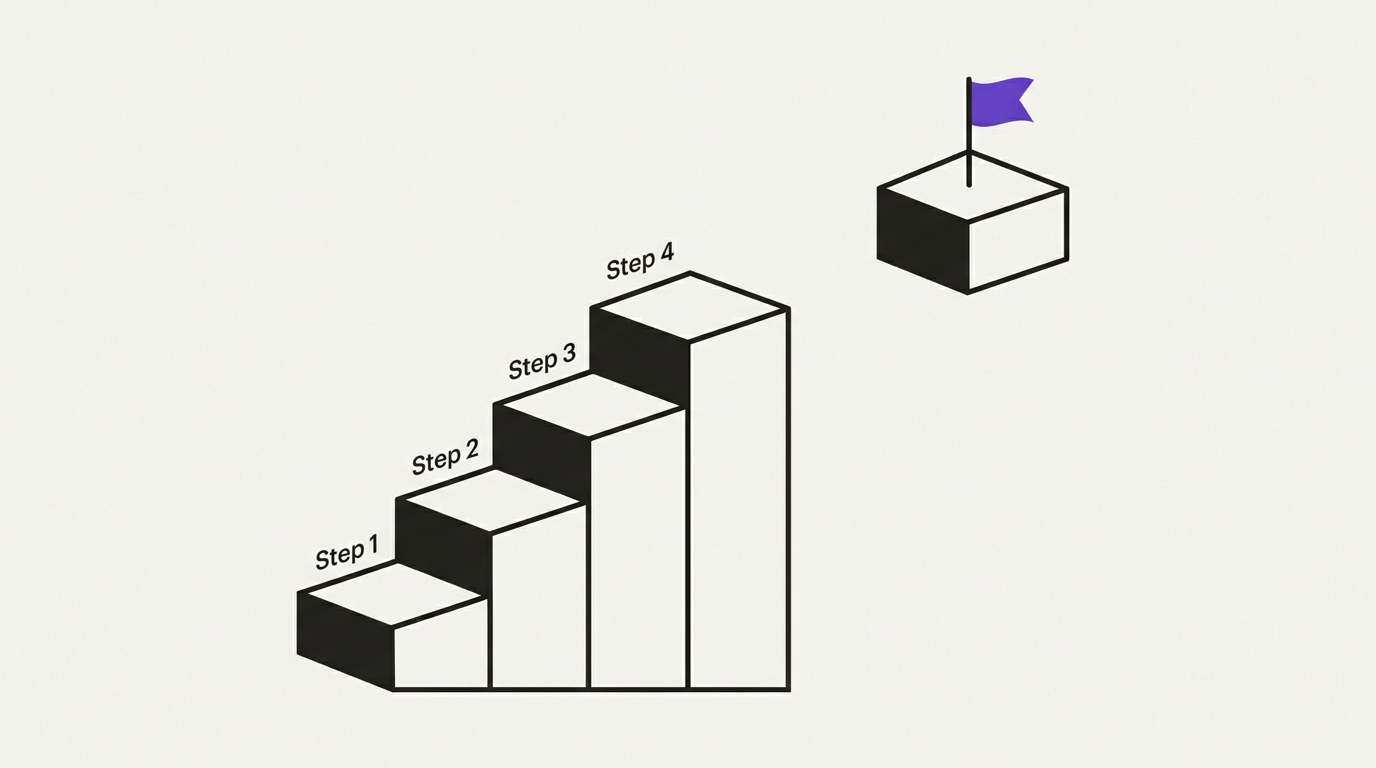
The program is built on four ranks (the agreement text, checked 2026-07-28):
- Basic: 10% at 0-100 clients
- Member: 25% at 100-1000 clients
- Pro: 30% at 1000-5000 clients
- Plutus: 35% at more than 5000 clients
The top rate in the grid is 35%. The landing page states “up to 40%” (the firm’s own page, checked 2026-07-28). Five percentage points of difference between the two maximums.
Promo codes are mentioned separately on the landing page: up to 40% from rank 3 and up to 60% from rank 4 (the firm’s own page, checked 2026-07-28). This is a separate instrument with its own figures, and it does not coincide with the rank grid for the ordinary referral link.
Where recurring commission actually lives
The key point of this piece. On the landing page repeat commissions are presented as a property of the program through the line “they buy again, you earn again” (the firm’s own page, checked 2026-07-28). That wording contains neither a rank nor a condition.
In the agreement, recurring commission is listed among the benefits of rank 4 (the agreement text, checked 2026-07-28). Rank 4 in the grid is Plutus, which opens at more than 5000 referred clients (the agreement text, checked 2026-07-28).
So under the text of the agreement, repeat commissions switch on at 5000 referred clients. An affiliate on the Basic, Member and Pro ranks works without them.
For a media buyer this changes the payback model entirely. The landing page model assumes that the acceptable cost per lead is calculated from LTV. The agreement model for the first three ranks assumes a one-off commission, and the cost per lead is calculated from a single conversion. We looked at the difference in more detail in the piece on why the commission rate is not the main thing.
Attribution window: 365 days and the 90 day clause
The landing page states 365 days and compares itself with the market in plain words: “not 30 like most” (the firm’s own page, checked 2026-07-28).
The agreement puts it differently: registration must take place within 90 days of the first visit (the agreement text, checked 2026-07-28).
These are two different constructions. One describes the lifetime of the cookie, the other the period within which the registration action must occur. An affiliate planning a year of warming up an audience and an affiliate planning three months to registration build different funnels. We covered the mechanics in the piece on the attribution window.
Conditions for crediting commission
The agreement describes three conditions for accrual (the agreement text, checked 2026-07-28):
- the visitor accepted marketing cookies;
- the visitor used the same browser;
- the visitor did not delete cookies.
Each cuts off part of the traffic on a side the affiliate does not control. Declining cookies in the consent banner, switching from mobile to desktop, clearing the browser between the touch and the purchase: in all these cases, under the text of the agreement, no commission is credited. Tracking runs through Tracknow (the agreement text, checked 2026-07-28).
Hold period, refunds and the cost of withdrawal
The agreement sets an 8 day hold period before approval and a clawback if the client is refunded (the agreement text, checked 2026-07-28).
The minimum payout is 50 dollars, processing takes up to 48 hours, payouts go through Rise (the agreement text, checked 2026-07-28). A 5% fee is deducted from each payout (the agreement text, checked 2026-07-28).
Those 5% are worth building into the calculation. The Basic rate of 10% after the deduction gives an effective 9.5% of the referral’s payment amount. At the Plutus rank, 35% becomes 33.25%. The amount is small, but it is deducted from every payout rather than once.
Sub-affiliate program
On the landing page the sub-affiliate program is presented as a network scheme (the firm’s own page, checked 2026-07-28). In the agreement it is not mentioned at all (the agreement text, checked 2026-07-28).
This is not a discrepancy in numbers but the absence of a term in the document that governs the relationship between the parties. The rates by level, the term, the order of accrual and cancellation are not published in the agreement.
Figures that cannot be verified
The landing page publishes: 1,450,000 dollars paid out, 2750 affiliates, 50,000 funded traders (the firm’s own page, checked 2026-07-28). The figures are self-reported and no independent confirmation is attached.
Separately: the leaderboard and the testimonials are hardcoded into the page HTML and are not updated (the firm’s own page, checked 2026-07-28). Technically this means that the positions and amounts shown are not a current snapshot of the program.
We draw no conclusion about the accuracy of the figures themselves. We record that they cannot be verified from the published materials.
What to do
- Save a copy of the agreement with the date of the April 2026 update. The version matters here: the parameters have already changed once.
- Ask the manager directly at which rank recurring commission switches on, and get the answer in writing with a reference to the clause of the agreement.
- Calculate the payback of your first campaigns at the Basic rate of 10% minus the 5% withdrawal fee, without repeat commissions.
- Check how your traffic behaves at the cookie consent banner. If a significant share declines, those conversions are not credited under the text of the agreement.
- Do not plan a 365 day funnel. The agreement requires registration within 90 days.
- Request the terms of the sub-affiliate program in writing: they are not in the agreement.
- Clarify how “clients” are counted for moving between ranks: by paid orders, by unique buyers or otherwise. The grid does not spell this out.
We described the method for comparing sources in the piece on the landing page against the agreement.
Company response
We sent Plutus Trade Base a request for comment on the discrepancies in the rate, the attribution window and the terms of recurring commission, and on the absence of the sub-affiliate program from the text of the agreement. We will publish the response when it arrives. At the time of publication no response has been received.
Disclosure: propcases.com is owned by the prop firm Hash Hedge.