Attribution window: from 7 days to a year
The attribution window is the period during which a referral’s purchase is credited to you after their first click on your link. He clicked today and bought on day twenty: with a 30 day window the commission is yours, with a 7 day window the commission is the firm’s.
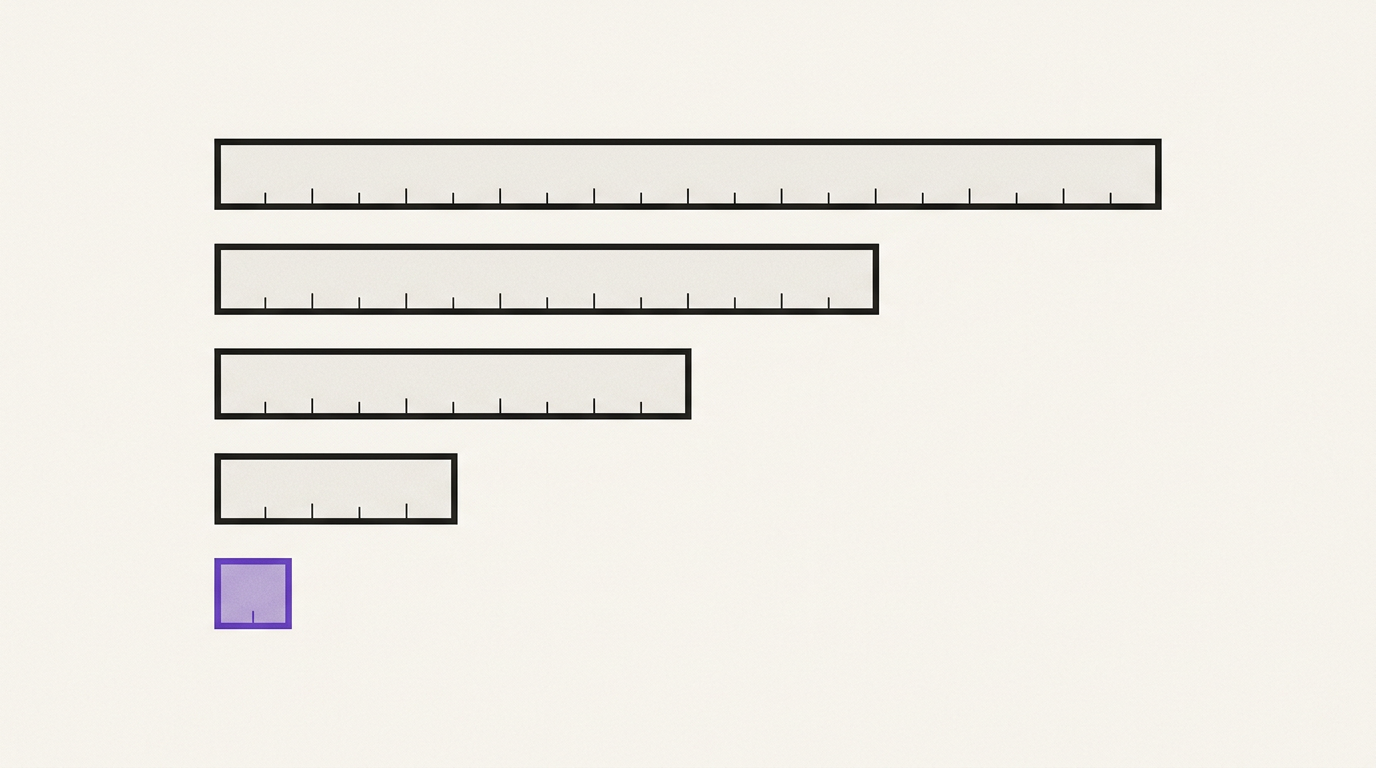
In prop affiliate programs this parameter varies more than any other. The gap between the minimum and the maximum in the niche is more than fiftyfold. At the same time the window is almost never put on the landing page in large type, and half of the firms do not have it in their public materials at all.
Disclosure: propcases.com is owned by the prop firm Hash Hedge.
What is published
| Window | Firms | Source |
|---|---|---|
| 7 days | For Traders | The firm’s own page, 2026-07-28 |
| 30 days | Maven Trading, WenCrypto, Instant Funding | The firms’ own pages, 2026-07-28 |
| 45 days | OneUp Trader (per the agreement) | Agreement text, 2026-07-28 |
| 60 days | Crypto Fund Trader, Tradeify | The firms’ own pages, 2026-07-28 |
| 90 days | FundedNext, Topstep, Funded Trading Plus, Plutus Trade Base (per the agreement) | Own pages and agreements, 2026-07-28 |
| 180 days | Apex | The firm’s own page, 2026-07-28 |
| 365 days | Blueberry Funded, TradeDay | The firms’ own pages, 2026-07-28 |
Two rows in the table contain a trap. OneUp Trader promises 60 days on the landing page, while the Affiliate Partner Agreement you sign says 45. Plutus Trade Base promises 365 days on the landing page, while the agreement says 90 (the firms’ own pages and agreement texts, checked 2026-07-28). At Plutus the discrepancy is fourfold. More on these and other mismatches in the review of the landing page against the agreement.
What is not published
Nineteen firms out of the thirty six reviewed do not publish the attribution window on the affiliate page or in the help section (the firms’ own pages, checked 2026-07-28). That is more than half the niche.
FundingPips goes further and openly refuses to state the term, sending the affiliate to look the value up in the dashboard (the firm’s own page, checked 2026-07-28).
An undisclosed window means three things. You cannot calculate the economics of a source before launch. You cannot compare the program with another one. And you do not hold a fixed commitment, which means the term can be changed at any moment without notice, and you will only find out from a drop in conversion in your report, which you will write off as traffic quality.
Why the spread is so wide
The reason is not technical. Technically, setting a cookie for a year is no harder than setting one for a week. The reason is who gets the delayed purchase.
A prop product is not bought on impulse. The trader compares account sizes, drawdown rules, profit withdrawal terms, reads reviews, sometimes waits for payday or a discount promotion. Time passes between the first touch and the payment, and the shorter the window, the larger the share of those delayed purchases the firm keeps for free.
A short window is not a technical limitation, it is a way to make acquisition cheaper at the affiliate’s expense. A long window is a willingness to pay for delayed demand. Both positions are legitimate, but the choice between them should be yours, not the default window’s.
How to calculate the losses
None of the firms publishes precise data on what share of buyers decides on which day. So you have to calculate using your own numbers, not someone else’s estimates.
The model is simple. Let D be the share of your referrals who buy later than day X. Then the actual revenue with an X day window equals full revenue multiplied by (1 - D).
To get D you need your own statistics on the delay between click and conversion. It exists in any tracker: the difference between click time and postback time. If you have already run traffic to any similar product, you have the distribution. If not, capture it on the first source with a long window and use it as a benchmark for evaluating the other programs.
After that the comparison is honest. A program with a 20% rate and a 30 day window at D = 0.3 gives an effective 14%. A program with a 15% rate and a 365 day window at D close to zero gives an effective 15%. The second one wins, even though it sits lower in the ranking.
The same technique works with other parameters: the rate has to be multiplied by everything that cuts off part of your conversions. The full set of multipliers is covered in the pillar article on why the commission rate is not the main thing.
How sensitive each traffic source is to the window
Content and SEO are maximally sensitive. An article that ranks for six months collects clicks, part of which convert weeks later. With a 7 day window the content model barely works: you hand the firm all the delayed demand you created yourself.
Email and retargeting are moderately sensitive. You can push a referral over the line with a repeat touch and refresh the attribution, but every repeat touch costs money.
Direct performance with a fast decision is minimally sensitive. If your traffic buys on the same day, the difference between 7 and 365 days is small for you, and you can afford to look at the rate.
Hence the practical conclusion: a short window does not make a program bad, it makes it incompatible with part of the sources. For Traders with a 7 day window (the firm’s own page, checked 2026-07-28) is a perfectly workable program for a source with a fast cycle and a zero payout threshold, but a poor choice for a blog.
What to do
Demand the number in writing. If the window is not published, ask the affiliate manager and keep the answer in your email. A refusal to name the term is an answer.
Check the window in the agreement, not on the landing page. The two mismatch cases reviewed above show that the landing page figure can be four times larger than the contractual one.
Capture your own delay distribution. Without it you cannot estimate what a short window costs you personally.
Do not compare the window separately from the attribution method. A 365 day window is useless if attribution runs on a promo code or lives for one browser session. How exactly that breaks the calculation is covered in the piece on why a link click does not count.